Tindora Masala (Ivy Gourd Curry)
टिंडोरा मसाला
By Geeta S · 55 min · serves 4 · South Indian
Cook mode, timers and a grocery list — get the Zaika app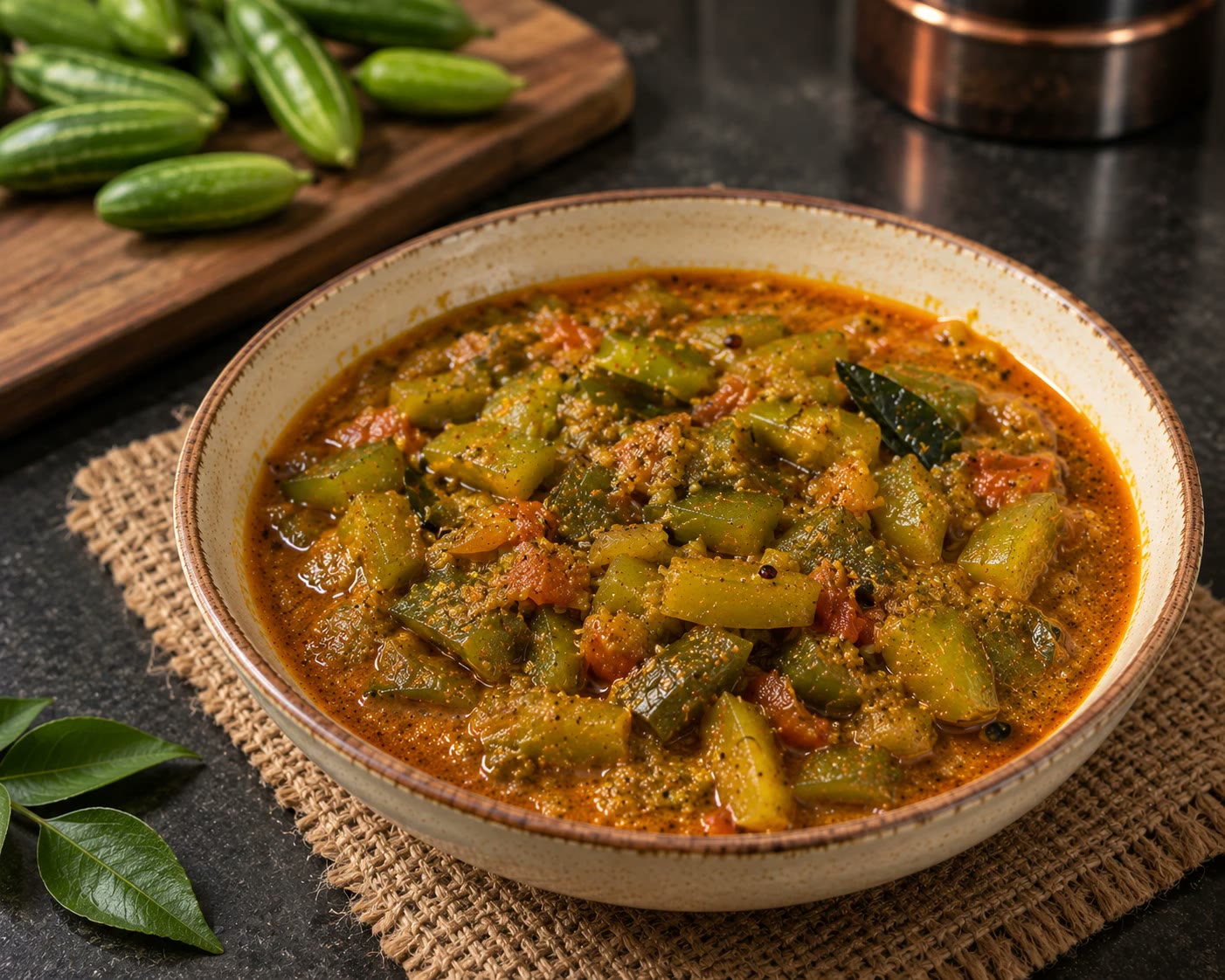
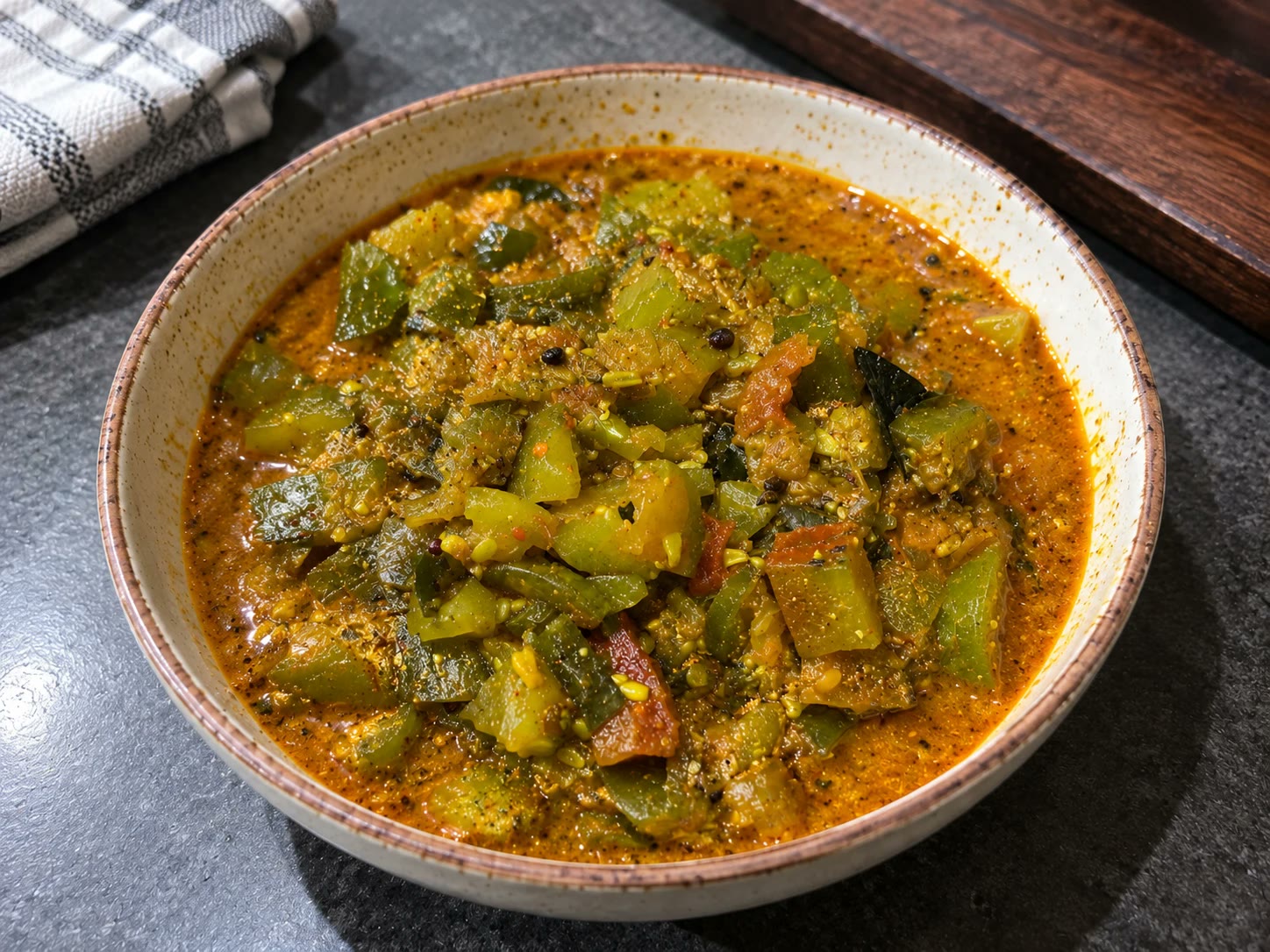
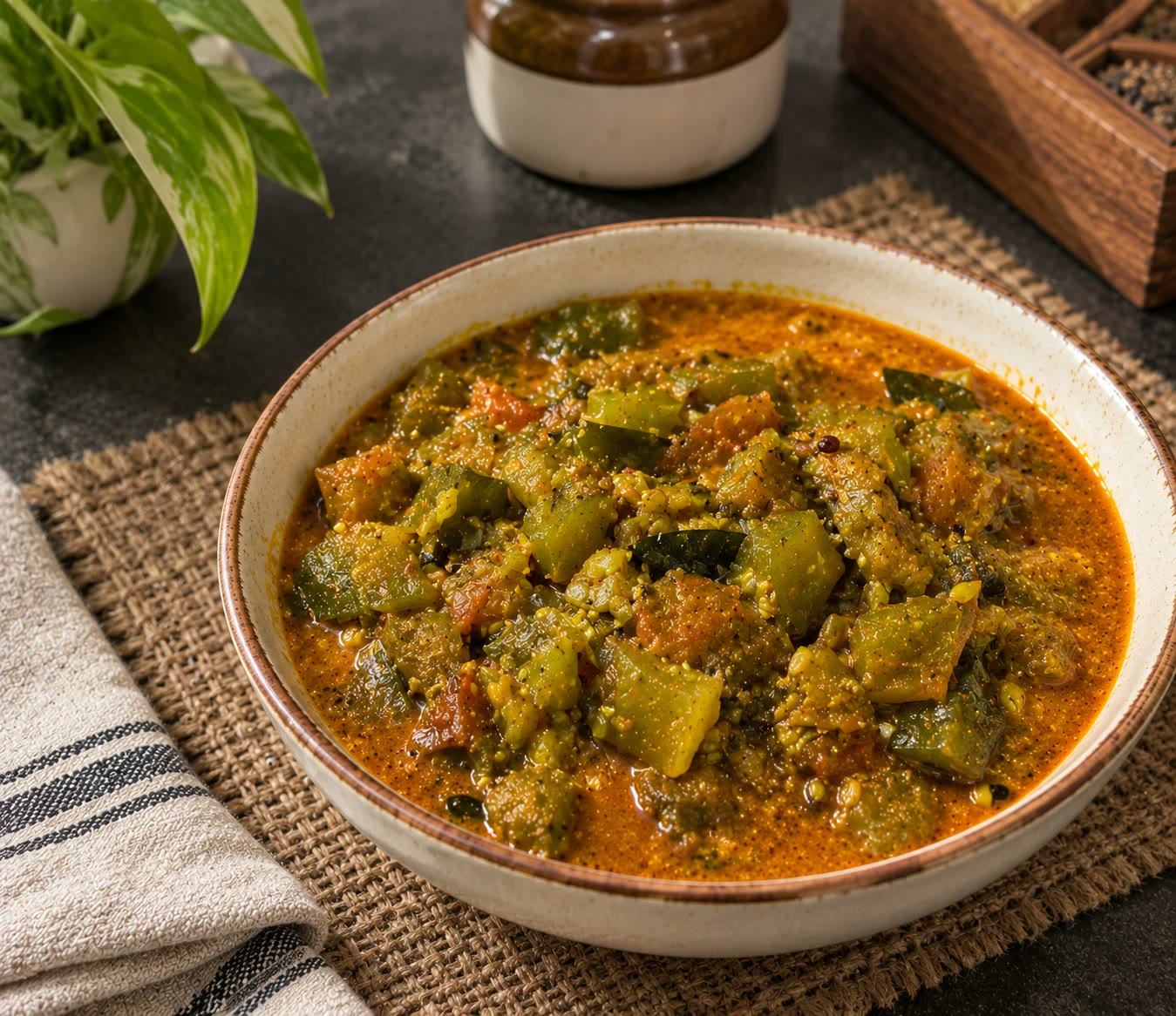
Ivy gourd — tindora at the Indian grocery, tendli, dondakaya or kovakkai depending on whose kitchen you learned it in — cooked in a masala of onion, tomato and coarsely ground roasted coriander, with the mustard-seed and curry-leaf tempering of a South Indian home. It is a semi-gravy rather than a dry stir-fry: the masala clings to the pieces and a shallow pool of gravy sits in the bowl, which makes it a chapati dish and a dabba dish in one. The only thing it asks is patience, because tindora stays firm longer than most vegetables and is at its best the moment it has just given up. This is Geeta’s dish and her photographs; the write-up is Zaika’s, checked against them.
Ingredients
- 500 g tindora (ivy gourd), ends trimmed, cut into 1–2 cm chunks1 lb 2 oz tindora (ivy gourd), ends trimmed, cut into 1–2 cm chunksIn the US: There is no exact stand-in. Indian groceries sell it loose and in 12 oz frozen bags of cut tindora: you need about one and a half bags for 500 g, cooked for about ten minutes with the water cut to 50–75 ml, because the frozen gourd brings its own. The fresh gourd turns up now and then at Southeast Asian groceries. Young zucchini cut thick gives the shape but not the slight bite — it is a different dish, and an acceptable one; give it six to eight minutes with little or no water, or it turns to mush.
- 1½ tbsp coriander seeds, for the roasted spice1½ tbsp coriander seeds, for the roasted spiceIn the US: If the pantry only has ground coriander and cumin, use the same amounts and toast them in the dry pan for about thirty seconds, stirring, until they smell nutty; ground spice burns fast, so take the pan off the heat the moment they do. The flavour is close; the grainy texture on the pieces is lost.
- 1 tsp cumin seeds, for the roasted spice1 tsp cumin seeds, for the roasted spice
- 2 tbsp neutral oil2 tbsp neutral oil
- 1 tsp mustard seeds1 tsp mustard seedsIn the US: The yellow mustard seed in a US supermarket spice aisle works. It is milder and pops less eagerly than the small black or brown rai of an Indian kitchen, so add the curry leaves once the first few seeds pop rather than waiting for a full crackle.
- A sprig of curry leaves (10–12 leaves)A sprig of curry leaves (10–12 leaves)In the US: Frozen curry leaves from an Indian grocery keep for months and are the thing to buy. Dried ones are a faint echo; if you have neither, leave them out rather than reach for bay leaves, which are a different flavour altogether.
- 2 green chillies, slit lengthwise2 green chillies, slit lengthwise
- 150 g onion, finely chopped1 medium onion, finely chopped
- 1 tsp ginger-garlic paste1 tsp ginger-garlic pasteIn the US: Half a teaspoon each of finely grated fresh ginger and garlic does the same job.
- 250 g tomatoes, finely chopped2 medium tomatoes, finely chopped
- ½ tsp turmeric½ tsp turmeric
- 1 tsp red chilli powder1 tsp red chilli powderIn the US: Kashmiri chilli powder gives the same red colour with less heat; paprika gives the colour and almost no heat at all. Cayenne is hotter than either, so halve it.
- 150 ml water⅔ cup water
- 1 tsp jaggery1 tsp jaggeryIn the US: The same amount of brown sugar. It is there to round off the tomato, not to sweeten.
- Salt to taste — about 1 tspSalt to taste — about 1 tsp
Method
- 1Wash the tindora, trim both ends and cut into 1–2 cm chunks, quartering the fat ones lengthwise first so every piece is roughly the same size and cooks in the same time. Cut one open: small, soft seeds are normal, but large, hard seeds or any orange-red blush inside mean an old gourd, which stays tough-skinned and turns sour. Leave those out.
- 2Dry-roast the coriander and cumin seeds in a small pan on medium heat, shaking it, until they smell nutty and go a shade darker. Cool for a minute and grind coarse in a spice grinder or a mortar — a few pulses, not a powder. The grainy texture on the finished pieces is this spice, and ground fine it disappears into the gravy.3 min
- 3Heat the oil in a wide pan on medium-high. Add the mustard seeds and wait for them to crackle, then the curry leaves and slit chillies — stand back, the leaves spit. This tempering is what makes it taste of a South Indian kitchen rather than a North Indian one.
- 4Turn the heat down to medium, add the onion with a pinch of the salt and fry until soft and golden at the edges. Golden, not brown: an onion taken dark muddies the orange the tomato is about to give. Stir in the ginger-garlic paste and cook until it stops smelling raw, about a minute.7 min
- 5Add the tomatoes, turmeric and the rest of the salt. Cook, stirring now and then, until the tomato collapses and the oil shows at the edges. Chopped, not pureed, on purpose — the red flecks in the finished bowl are pieces of tomato cooked just past collapse.7 min
- 6Add the tindora, the chilli powder and the roasted spice. Stir to coat every piece, pour in the water, cover and cook on medium-low, stirring every five minutes, until a piece gives easily under a spoon but still holds its shape. Add a splash more water if the masala catches on the pan.18 min
- 7Uncover, stir in the jaggery and cook until the masala clings to the pieces with a shallow pool of loose gravy around them — not a dry sabzi and not a soup. Taste for salt. The curry leaves cooked through are the only green it needs; there is no coriander on top. Rest five minutes before serving.4 min
Prefer to cook in Hindi, Tamil, Bengali or another language? Save this into the Zaika app and the method reads in yours.
Pressure cooker tindora masala
Pressure cooker
Tindora is slow to soften in a pan. Two whistles does the same job a few minutes faster and with no stirring, at the cost of a slightly softer piece — the right trade on a weeknight, and the dependable one for gourds that are past their best.
- 1Make the roasted spice, the tempering and the onion-tomato masala in the cooker base exactly as in the pan method, up to the point where the oil shows at the edges of the tomato.15 min
- 2Add the tindora, chilli powder, roasted spice and only 100 ml of water, since almost nothing evaporates under pressure. Scrape the base of the cooker clean and stir well before you close it: thick masala left stuck to the bottom scorches before the first whistle. Close the lid and cook on medium for two whistles, then let the pressure drop on its own for five minutes and release whatever is left.12 min
- 3Open, stir in the jaggery, and simmer uncovered for three or four minutes until the masala thickens and clings to the pieces. It will be looser than the pan version at first; that is the water that did not evaporate, and the simmer takes care of it.4 min
If it goes wrong
Why your tindora stays tough however long you cook it
Usually the gourd, not the pan. Tindora is picked young; the older ones are paler and fatter, full of large, hard seeds, with skins that never give, and a batch bought past its best will stay firm after half an hour. Choose slim, firm, bright green ones that snap rather than bend, and cut any open that look suspect — a red interior means it has ripened and gone sweet-sour. Cutting helps too: 1 cm pieces cook noticeably faster than 2 cm ones, and quartering the thick gourds lengthwise exposes more of the inside to the masala. Keep the lid on, keep a splash of water in the pan, and if it is still resisting at twenty minutes, the pressure cooker method above is the honest answer.
Substitutions
Buying tindora in the US and what it is called on the label
The same vegetable goes by tindora, tendli, tindli, kundru, dondakaya, kovakkai and tondekayi, and the US Indian grocery label is almost always "tindora" or "ivy gourd". Fresh, it sits with the loose vegetables and keeps a week in the fridge in a paper bag. Frozen cut tindora in 12 oz bags is a good second choice for this recipe, and 500 g is about one and a half bags: do not thaw it, add it straight to the masala and cook it for ten minutes rather than eighteen, because freezing has already done part of the softening. Cut the water to 50–75 ml, since the frozen gourd brings its own. It also turns up now and then, often unlabelled, at Southeast Asian groceries.
Keeping it
Keeping tindora masala, and why it is better the next day
It keeps three days in the fridge and improves over the first of them, as the gourd takes on the masala it was only coated in when it came off the heat. The gravy tightens as it cools, so reheat it in a pan with a splash of water rather than in the microwave, which dries the edges before the middle is warm. It does not freeze well — the pieces turn watery when thawed — so cook the amount you will eat within a few days.
Serving
What to serve with tindora masala
Chapati or phulka first: the loose gravy is exactly what a flatbread is for. With rice it is a side rather than the main event — put it next to a dal or a rasam and let it be the vegetable. It is also one of the better dabba dishes, because it does not leak the way a thinner curry does and it tastes right at room temperature; for the box, give it two more minutes uncovered so the gravy tightens around the pieces. A spoon of plain yoghurt on the side if you are not keeping it vegan.
Substitutions
Is tindora masala vegan, gluten-free and nut-free?
Yes to all three as written: no dairy, no wheat, no nuts. There is no asafoetida either, which matters because the pinch of hing many cooks add to a tempering is usually cut with wheat flour; if you add one for someone who avoids gluten, buy a hing labelled gluten-free, and glance at the label on ready-made ginger-garlic paste and spice powders for a may-contain warning. Fry in a neutral oil that is not peanut oil when you are cooking for a peanut allergy. The one listed allergen in the pan is mustard seed, which is on the allergen lists in Canada and the EU though not in the US; for someone who reacts to it, leave it out and start the tempering with half a teaspoon of cumin seeds instead.
Nutrition
Estimated, per serving.
- Calories
- 135
- Protein
- 3 g
- Carbs
- 13 g
- Fat
- 8 g
- Fibre
- 4 g
- Sodium
- 590 mg
This recipe is ready for the Zaika app
Step timers on the method, the whole thing readable in your own language, and the ingredients on a grocery list split by the shops you actually use. Zaika is free on iPhone and Android.