Samosa
समोसा
By Geeta S · 85 min · serves 12 · Punjabi
Cook mode, timers and a grocery list — get the Zaika app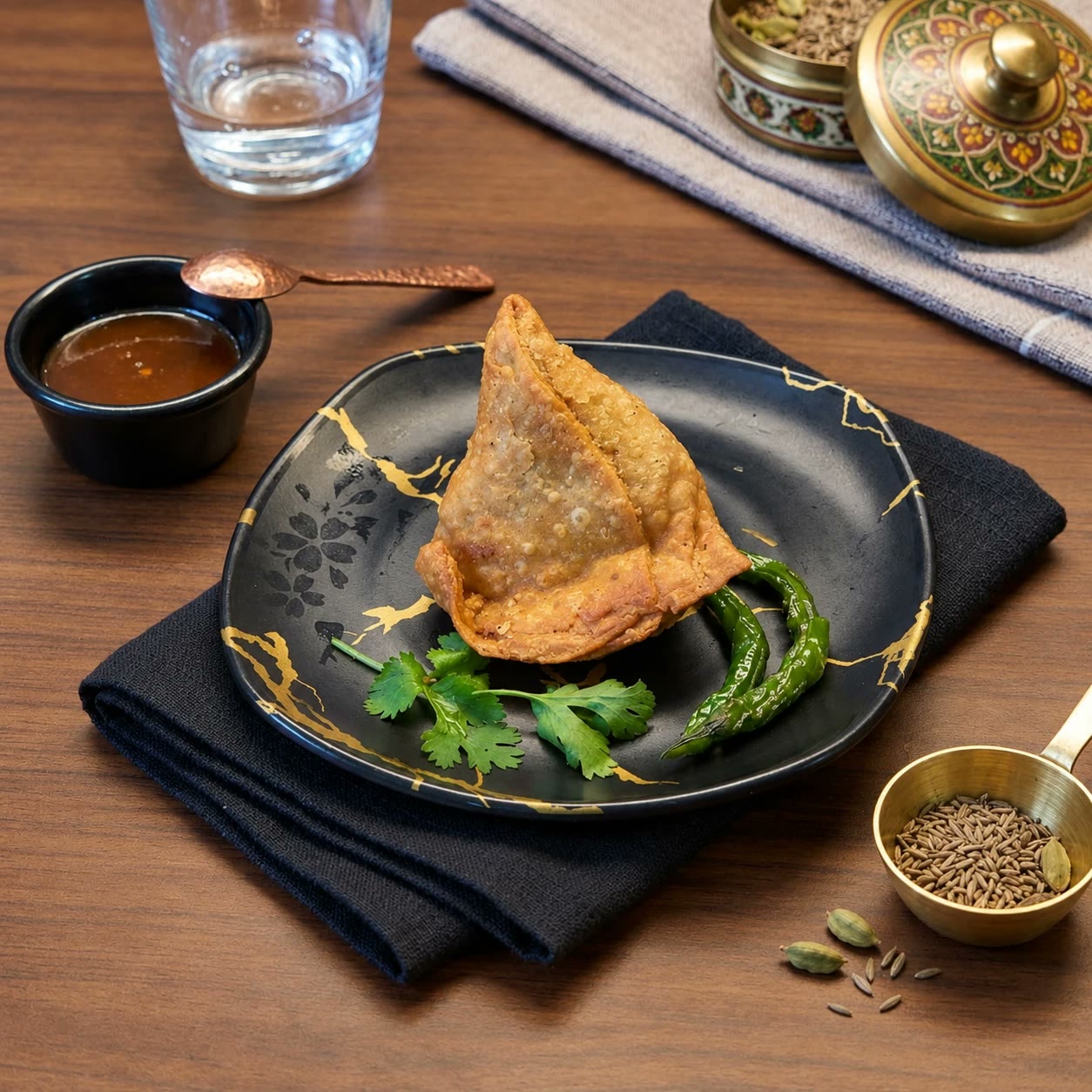
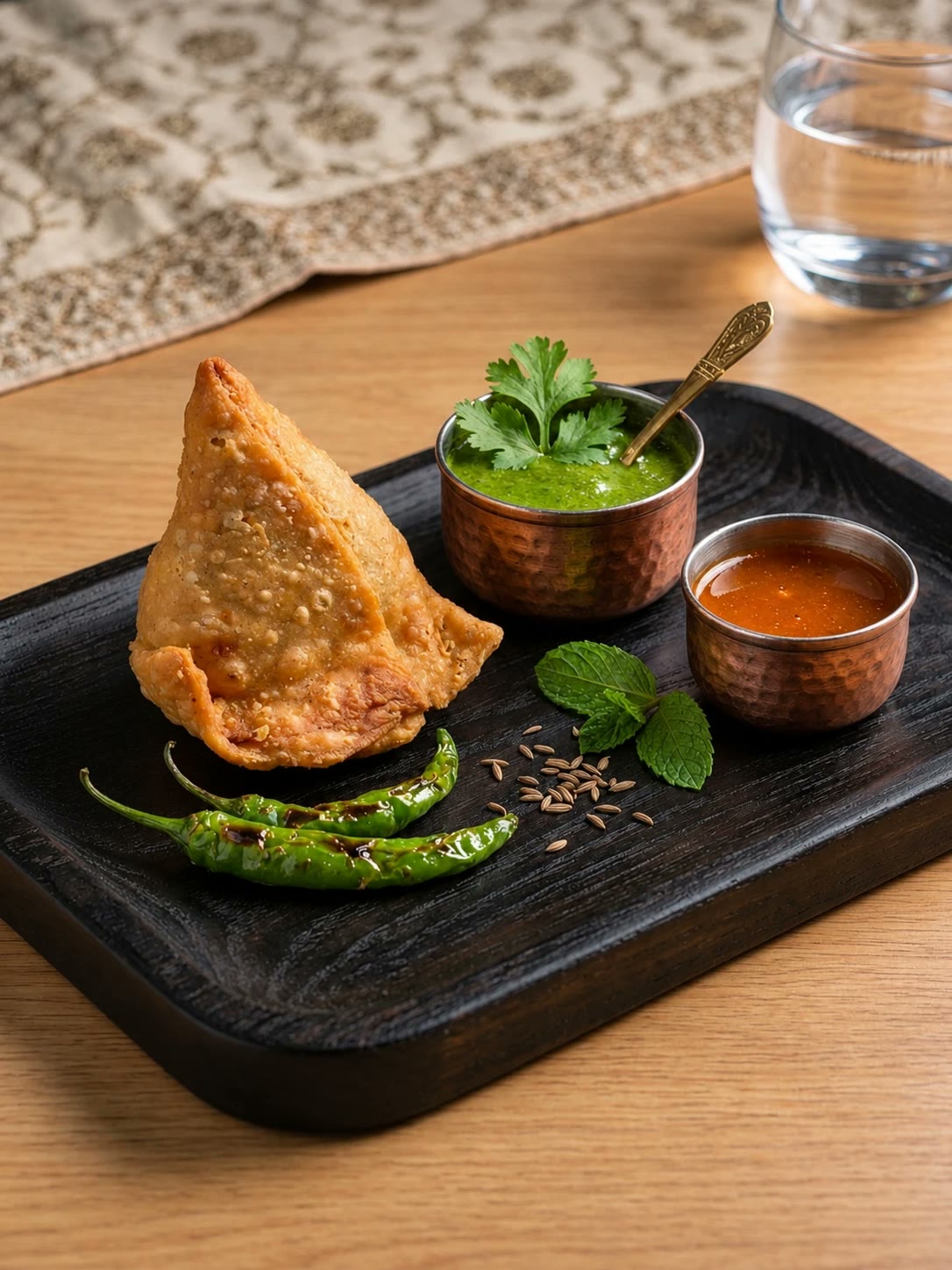
The Punjabi samosa: a khasta pastry, blistered and flaky, around a spiced potato-and-pea filling, fried slowly enough that the crust bubbles before it browns. Put the potatoes on to boil and make the dough before anything else: the dough needs a thirty-minute rest that the prep and cook times do not count, and the potatoes and the filling get done while it waits. Two things decide whether these come out khasta or smooth and hard: a stiff dough with enough moyan, the fat rubbed into the flour, that a fistful of it holds its shape, and oil kept at a lazy medium so the pastry blisters and cooks through before it colours. This is Geeta’s dish and her photographs; the write-up is Zaika’s, checked against them.
Ingredients
- 250 g all-purpose flour (maida), for the pastry2 cups all-purpose flour (maida), for the pastryIn the US: Plain all-purpose flour is maida. Bread flour makes a tougher crust; do not use it.
- 1 tsp ajwain (carom seeds), for the pastry1 tsp ajwain (carom seeds), for the pastryIn the US: Indian groceries and online, in a small packet that lasts a year. Half a teaspoon of dried thyme is the nearest thing in a US supermarket; without either the pastry is fine, just plainer.
- 60 ml oil, for the pastry¼ cup oil, for the pastryIn the US: The same weight of ghee gives a richer, more fragile crust and makes the samosas vegetarian rather than vegan. Both blister just the same.
- 90 ml cold water, for the pastry, plus a little for sealing6 tbsp cold water, for the pastry, plus a little for sealing
- 500 g potatoes, boiled, peeled and roughly crushed1 lb 2 oz potatoes, boiled, peeled and roughly crushed
- 100 g green peas, fresh or frozen¾ cup green peas, fresh or frozen
- 2 tbsp oil, for the filling2 tbsp oil, for the filling
- 1 tsp cumin seeds1 tsp cumin seeds
- 1 tsp coriander seeds, roughly crushed1 tsp coriander seeds, roughly crushed
- ½ tsp fennel seeds, roughly crushed½ tsp fennel seeds, roughly crushed
- 1 tbsp ginger, finely chopped1 tbsp ginger, finely chopped
- 2 green chillies, finely chopped, plus whole ones to fry for the plate2 green chillies, finely chopped, plus whole ones to fry for the plate
- ½ tsp turmeric½ tsp turmeric
- 1 tsp red chilli powder1 tsp red chilli powder
- 1 tsp garam masala1 tsp garam masala
- 1 tsp amchur (dried mango powder)1 tsp amchur (dried mango powder)In the US: A tablespoon of lemon juice, stirred into the filling off the heat. Sharper, and less fruity, but it does the job.
- Salt — ½ tsp for the pastry, 1 tsp for the fillingSalt — ½ tsp for the pastry, 1 tsp for the filling
- A handful of coriander leaves, chopped, for the fillingA handful of coriander leaves, chopped, for the filling
- 750 ml neutral oil, for deep frying3 cups neutral oil, for deep fryingIn the US: Canola, vegetable or peanut oil: anything neutral that takes a long fry without smoking. Not olive oil. If you fry in peanut oil, tell anyone at the table with a peanut allergy.
- Tamarind chutney, green chutney and a few sprigs of coriander or mint, to serveTamarind chutney, green chutney and a few sprigs of coriander or mint, to serveIn the US: Tamarind chutney comes in bottles at any Indian grocery, as imli or date-and-tamarind chutney; without one, ketchup with a pinch of roasted cumin and chilli powder is what plenty of Indian households put out. Green chutney takes five minutes to blend, and the quantities are in the note on chutneys.
Method
- 1Put the potatoes on first, whole and in their skins, in a pan of water to cover, and simmer for twenty to twenty-five minutes, until a knife slides into the biggest one with no resistance (or two whistles in a pressure cooker). Drain them and leave them to steam dry. Boiled in their skins they take up less water, and a dry potato is what keeps the filling from bursting the pastry later.25 min
- 2Make the pastry while they boil. Mix the flour, ajwain and ½ tsp salt, add the oil — this is the moyan — and rub it in with your fingertips until the flour looks like damp sand and a fistful squeezed tight holds its shape when you open your hand. This is the test that matters: too little fat and the crust fries smooth and hard. Add the cold water a little at a time and bring it to a stiff dough, firmer than chapati dough, and knead for only a couple of minutes. Cover with a damp cloth and rest it for thirty minutes.30 min
- 3Meanwhile, the filling. Peel the potatoes as soon as you can handle them and crush them roughly. If your peas are fresh, boil them for three or four minutes first; frozen ones go in as they are. Heat the 2 tbsp of oil in a wide pan, add the cumin, crushed coriander and fennel and let them sizzle for a few seconds, then the ginger and chopped chillies for half a minute. Add the turmeric and chilli powder, then the crushed potatoes, the peas and 1 tsp salt, and cook for four or five minutes, pressing some of the potato against the pan so the filling binds. Turn off the heat and stir in the garam masala, amchur and coriander leaves. Taste now and adjust the salt and the sourness: once the samosas are sealed there is no fixing it.8 min
- 4Spread the filling on a plate and let it cool completely. A warm filling steams the pastry from the inside while you fold, and that is where leaks and bursts start.10 min
- 5Divide the dough into six balls. Roll each into an oval about 22 cm long and 15 cm across (9 × 6 in) and 2 mm thin, without flour on the board if you can manage it, and cut it across the middle into two half-moons. Twelve pieces. If the oval comes out smaller, the pastry is too thick, and thick pastry fries hard.
- 6Wet the straight edge of a half-moon, bring the two corners together into a cone and press the overlap to seal. Hold the cone in one hand and fill it three-quarters full, about ¼ cup (50 g). Wet the open rim, pinch it shut, then press a small pleat into the back of the seam so the samosa stands upright on a flat base. Keep the shaped ones under a cloth.
- 7Heat the frying oil in a deep pan no more than half full, to a lazy medium, about 150 °C: a scrap of dough should sink, then rise slowly with a few small bubbles rather than a fizz. Fry four or five at a time, turning now and then, for twelve to fifteen minutes a batch, until the pastry is pale gold and covered in blisters, then raise the heat for the last minute to deepen the colour. Lift them out, turn the heat back down and let the oil fall back to a lazy medium — the scrap test again — before the next batch goes in. High heat is what makes a samosa smooth outside and raw in the middle.15 min
- 8Last, the whole green chillies. Slit each one once with the tip of a knife and pat it dry: a whole chilli traps steam and can burst in hot oil. Turn the heat down, lower them in with a slotted spoon and stand back, then give them a minute until they blister and drain them with the samosas. Serve hot with tamarind chutney and green chutney and a few sprigs of coriander or mint on the plate.
Prefer to cook in Hindi, Tamil, Bengali or another language? Save this into the Zaika app and the method reads in yours.
Air fryer samosa
Air fryer
Flaky and far less oily, though the crust comes out smooth and evenly gold rather than blistered — khasta blisters need the oil. Choose this for a weeknight batch or for samosas you froze earlier.
- 1Make the pastry and filling and shape the samosas exactly as in the main method, then brush each one all over with a thin coat of oil. Dry patches stay pale and powdery, so be thorough.
- 2Air fry in batches, as many as fit without touching — four to six in most baskets, so two or three rounds for twelve — at 180 °C for 15 to 18 minutes a batch, turning them over halfway, until deep gold on every side. Frozen ones go in straight from the freezer and take about 22 minutes.18 min
If it goes wrong
Why your samosa pastry is not khasta: smooth and hard instead of blistered
Three causes, in the order they usually turn out to be true. Not enough moyan, the fat rubbed into the flour: the fistful test in the pastry step is not optional, and a dough that fails it fries into a hard shell. Oil too hot: at a rolling fry the surface sets instantly and smooth, and the inside of the pastry never gets the slow heat that lifts those blisters; drop a scrap of dough in, and if it fizzes up at once, turn the heat down and wait. A soft, well-kneaded dough: this pastry wants to be stiff and barely kneaded, the opposite of a chapati, because gluten pulls it smooth and chewy. Rolling it thick does the same.
If it goes wrong
Samosas that burst or leak in the oil
A warm or wet filling is the usual cause: it steams inside the sealed cone and forces the seam. Cool the filling completely and crush the potatoes rather than mashing them smooth, which holds less water. The other causes are a seam sealed with too little water, a cone filled right to the rim with no room for the pinch, and an air pocket left in the point of the cone, which expands as it fries. If one does burst, lift it out at once; the leaked filling burns and flavours the oil for every samosa after it.
Make ahead
Freezing samosas before frying, and frying them from frozen
Shape them, lay them on a tray without touching and freeze until hard, then bag them; they keep for two months. Fry from frozen, never thawed, because a thawed samosa goes soggy and splits: the same lazy-medium oil, about eighteen minutes, and they come out as blistered as fresh ones. Fried samosas reheat in a hot oven or air fryer for eight minutes, not in a microwave, which turns the crust leathery.
Substitutions
Samosa pastry in the US: flour, ajwain, and whether wrappers will do
All-purpose flour is maida, and any brand works. Ajwain sits with the whole spices at the Indian grocery and online, and a packet lasts a year; it is the taste that says samosa, so it is worth the trip, but half a teaspoon of dried thyme is an honest stand-in. Spring-roll or wonton wrappers make a thin, glassy crust that shatters rather than flakes — a good snack, and a different one from a khasta Punjabi samosa. Frozen peas go in as they are; fresh ones want three or four minutes in boiling water before they join the potato.
Serving
What to serve with samosas
Both chutneys, because they do different jobs: tamarind for sweet-sour, green for heat and freshness, and most people drag each bite through both. A green chilli, slit and fried for a minute in the samosa oil, is the Punjabi touch on the plate. With a cup of masala chai it is the standard late-afternoon snack; two samosas broken over chickpea curry, yoghurt and both chutneys is samosa chaat, and the best use of yesterday’s.
Serving
How to make green chutney for samosas, and what to use instead of tamarind chutney
Blend one bunch of coriander (cilantro), about 60 g with the tender stems, a small handful of mint leaves (about 15 g), one or two green chillies, a 2 cm piece of ginger, 1 tbsp lemon juice, ¼ tsp salt and 2 to 3 tbsp of cold water to a smooth, spoonable paste. A couple of ice cubes in place of the water keep the blender from warming it and dulling the colour. It keeps two days in a covered jar in the fridge. Tamarind chutney is sold in bottles at any Indian grocery as imli chutney or date-and-tamarind chutney; with neither to hand, ketchup stirred with a pinch of roasted cumin and chilli powder is the stand-in plenty of Indian households already use.
Substitutions
Is samosa vegan, gluten-free or nut-free?
Vegan as written, because the moyan is oil; the ghee swap makes it vegetarian instead. Not gluten-free: the pastry is wheat flour, and the gluten is what lets it roll to 2 mm and hold a seam. There are no nuts in this filling, though some cooks add cashews or raisins, so leave those out of a nut-free batch. The thing to check is the frying oil: use canola or vegetable oil rather than peanut when anyone at the table has a peanut allergy, and remember that a shop or restaurant samosa may have been fried in peanut oil.
Nutrition
Estimated, per serving.
- Calories
- 260
- Protein
- 4 g
- Carbs
- 25 g
- Fat
- 16 g
- Fibre
- 2 g
- Sodium
- 290 mg
This recipe is ready for the Zaika app
Step timers on the method, the whole thing readable in your own language, and the ingredients on a grocery list split by the shops you actually use. Zaika is free on iPhone and Android.