Kalakand (Milk Cake)
कलाकंद
By Geeta S · 90 min · serves 8 · Rajasthani
Cook mode, timers and a grocery list — get the Zaika app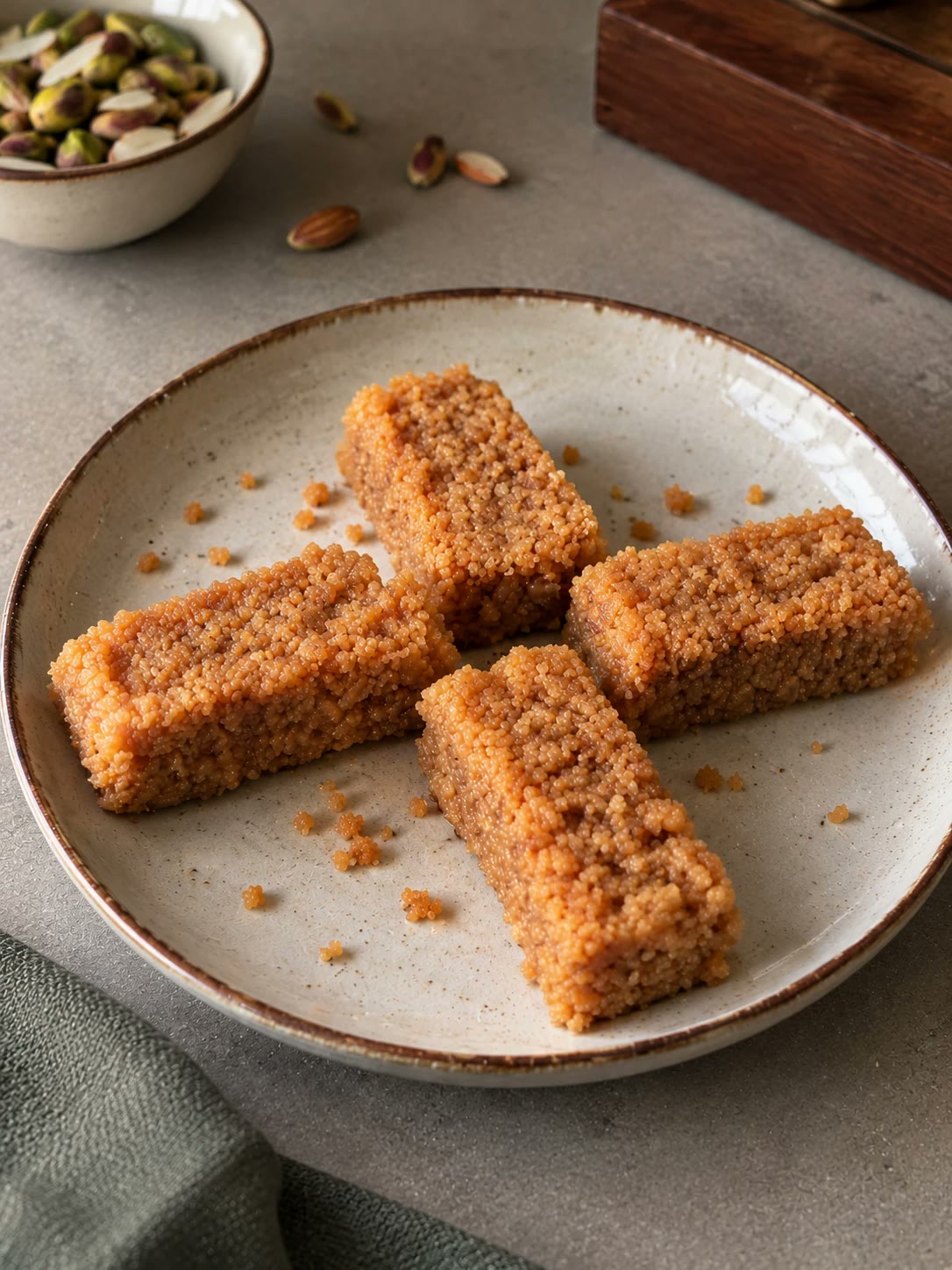
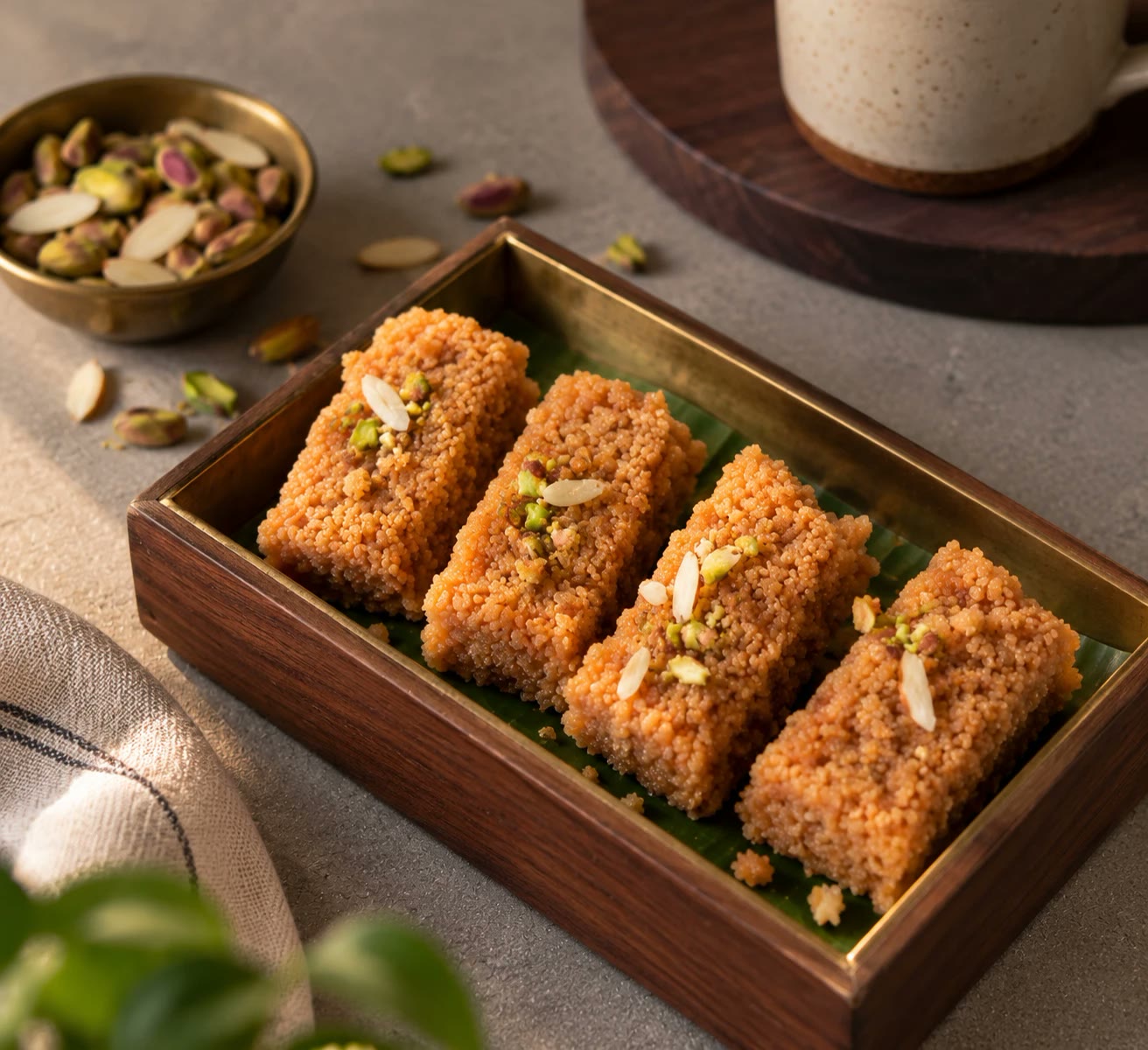
The caramel-brown, grainy, firm kind — sold in Alwar as milk cake and called kalakand in a great many homes — rather than the pale, soft, moist kalakand, which is a different method. Plan for an hour and a half at the stove, most of it stirring, and then an overnight wait: the pressed cake is wrapped warm and left to set, and that slow cooling deepens the colour at its centre. Made from milk, a little acid to grain it, sugar and ghee and not much else, it is the sweet that most rewards a wide, heavy pan and most punishes a thin one. This is Geeta’s sweet and her photographs; the write-up is Zaika’s, checked against them.
Ingredients
- 2 litres whole milk, pasteurised but not ultra-pasteurised8 cups whole milk, pasteurised but not ultra-pasteurisedIn the US: Ultra-pasteurised milk has been heated so hard that its proteins no longer catch into a grain when the acid goes in; it turns soft and mushy instead. Read the carton and choose one that says only pasteurised — store brands and local dairies usually do. Whole milk only: the fat is the richness.
- 1 tsp lemon juice, mixed with 1 tbsp water1 tsp lemon juice, mixed with 1 tbsp waterIn the US: A small pinch of citric acid, about a twelfth of a teaspoon, dissolved in a tablespoon of water: it is strong, and a quarter teaspoon does the work of a whole tablespoon of lemon juice. Or a small pinch of alum (fitkari), which is what the Alwar shops use. In the US, McCormick sells food-grade alum in the supermarket spice aisle, for pickling; the fitkari block at an Indian grocery is often sold for shaving and not labelled as food. Whichever you use, it goes in a little at a time: the job is to grain the milk, not to split it.
- 150 g sugar¾ cup sugar
- 2 tbsp ghee, plus a little for greasing2 tbsp ghee, plus a little for greasing
- ¼ tsp cardamom powder¼ tsp cardamom powder
- 1 tbsp chopped pistachios, to finish1 tbsp chopped pistachios, to finish
- 1 tbsp sliced almonds, to finish1 tbsp sliced almonds, to finish
Method
- 1Grease a small, deep tin — a 12 cm square, or a 10 × 15 cm loaf tin — with ghee and line it with a strip of parchment that overhangs two sides, so the set cake lifts out the right way up. Set it beside the stove with a thick kitchen towel. Bring the milk to a boil in the widest, heaviest pan you own, then keep it at a brisk simmer, stirring and scraping the base every minute or two, until it has reduced by half. On a home burner that takes forty-five minutes to an hour, counting the time to come to the boil; width is speed here, and a narrow pan doubles it.50 min
- 2Stir in the diluted lemon juice a teaspoon at a time, giving each addition half a minute. Stop as soon as the milk turns grainy — small soft curds suspended in thick milk, not the clean split of paneer — even if some of the acid is left over. If it looks like paneer in whey, too much acid went in; it will still make a sweet, but a crumbly one. Keep it at a steady simmer, stirring and reducing: this grain is the texture of the finished kalakand.15 min
- 3When the mass is thick and the grains sit in very little liquid, add the sugar. It loosens everything again; keep stirring on medium until it thickens back, then add the ghee and the cardamom and cook until the mass leaves the sides of the pan in one heavy lump and has turned from cream to a golden caramel. Stir constantly now — this is when it catches. Cool a pea-sized piece for a few seconds and roll it: it should hold as a firm, slightly grainy ball that does not stick to your fingers.20 min
- 4Press it into the lined tin about 3 cm deep and level the top. If it passed the ball test, wrap the whole tin in the thick towel while it is still hot and leave it on the counter overnight: the heat held inside keeps cooking the middle, which deepens a shade beyond the edges. Wrap it only if it came off as that stiff lump. A mass that is still soft holds too much water to sit warm all night, so leave it uncovered to cool and refrigerate it once it is cold.
- 5In the morning, lift it out by the parchment and cut it into eight bars, one to a serving. Press a pinch of chopped pistachio and a few almond flakes onto each bar, or leave them plain. The middle should be a shade darker than the edges, which is the slow cooling at work. It keeps two days covered at cool room temperature; after that, keep it in the fridge.
Prefer to cook in Hindi, Tamil, Bengali or another language? Save this into the Zaika app and the method reads in yours.
If it goes wrong
Why your milk cake is pale, or split into paneer and whey
Pale all the way through means it came off the heat before the golden-caramel stage: most of the colour is made in the pan, and the overnight wrap only deepens the centre a shade. Split into curds and clear whey means too much acid, or acid added before the milk had reduced enough to hold the grains in suspension; add it only once the milk is halved, a teaspoon at a time. Burnt at the base is a thin pan or a wandering cook: once the sugar is in, it needs stirring without a break. Rubbery is the opposite of grainy and comes from boiling hard after the acid, so keep it at a simmer from then on.
Substitutions
Milk, acid and the ricotta shortcut: making milk cake in the US
The milk matters most: plain pasteurised whole milk from a store brand, a local dairy or an Indian grocery, never ultra-pasteurised, whose proteins have been heated too hard to catch into a grain. For the acid, lemon juice is in every kitchen and citric acid is in the canning aisle, but citric acid is stronger than it looks — a quarter teaspoon does the work of a tablespoon of lemon juice — so a small pinch replaces the teaspoon here. Alum gives the cleanest grain; McCormick alum, in the spice aisle, is food-grade, which the fitkari block sold for shaving may not be. The popular shortcut of ricotta cooked with condensed milk makes the pale, soft kalakand in forty minutes and is a fine sweet, but it is not this one; nothing short of reducing the milk gives a milk cake its caramel colour and coarse grain.
Substitutions
Is kalakand gluten-free, egg-free or nut-free?
Milk, a little acid, sugar, ghee and cardamom are all there is, so it is gluten-free and egg-free as written, and it is not vegan: the sweet is milk. It contains no nuts if you leave the bars plain, which is as traditional as topping them, but check the cardamom pack for a may-contain warning before you give it to someone with a nut allergy. Alum is a mineral salt rather than an allergen; just make sure it is the food-grade kind.
Keeping it
How long kalakand keeps, and when it needs the fridge
Two days at cool room temperature in a covered box, which is how the shops sell it, and then the fridge, where it keeps a week and firms up; let it sit out for half an hour before serving or it eats like fudge. Wrapped in parchment and then foil it freezes for a month, and a night in the fridge thaws it with the grain intact. Cut only what you will serve, because the cut faces dry first.
Make ahead
Milk cake for Diwali: the one sweet to make two days early
Because of the overnight set it is the first sweet to make in a Diwali week, two or three days before the day, and it only improves for that; from the second day, keep it in the fridge. Make one batch at a time: two litres of milk is as much as a home pan reduces well, and doubling it turns an hour and a half of stirring into three. For a gift box, cut eight bars about 3 by 6 cm, top each with chopped pistachio and almond flakes, and pack them in their own layer so their moisture stays away from the kaju katli.
Nutrition
Estimated, per serving.
- Calories
- 270
- Protein
- 8 g
- Carbs
- 31 g
- Fat
- 13 g
- Sugar
- 30 g
- Sodium
- 110 mg
This recipe is ready for the Zaika app
Step timers on the method, the whole thing readable in your own language, and the ingredients on a grocery list split by the shops you actually use. Zaika is free on iPhone and Android.