Dal Khichdi
दाल खिचड़ी
By Pooja H · 35 min · serves 4
Cook mode, timers and a grocery list — join the Zaika waitlist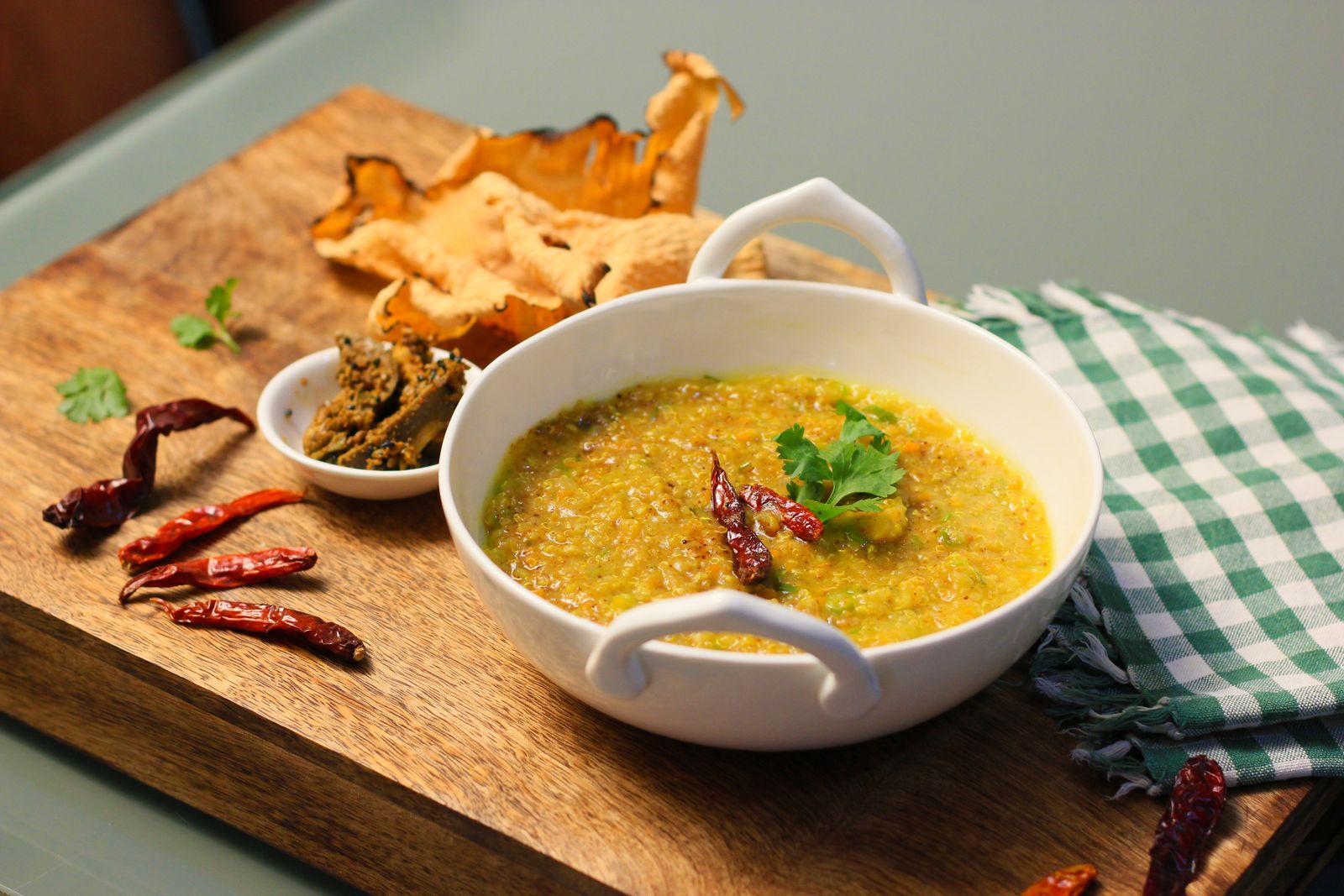
The one-pot meal you make when nobody wants to decide what to eat. Roasting the moong dal dry for a minute before it meets water is the step most people skip, and it is the difference between khichdi that tastes of something and khichdi that tastes of nothing.
Ingredients
- 150 g rice, short or medium grain¾ cup rice, short or medium grain
- 100 g split yellow moong dal½ cup split yellow moong dalIn the US: Labelled moong dal or yellow lentils at Indian groceries. Not yellow split peas — those hold their shape for twice as long and never go creamy.
- 950 ml water4 cups water
- 2 tbsp ghee2 tbsp gheeIn the US: Most US supermarkets stock it in the international aisle now. Unsalted butter works and you lose the nuttiness; oil works and you lose the point.
- 1 tsp cumin seeds1 tsp cumin seeds
- 1 pinch asafoetida (hing)1 pinch asafoetida (hing)In the US: Indian groceries only. Leave it out rather than reaching for a substitute — there is no real one. Note most brands are cut with wheat flour, so it is not gluten-free.
- 1 onion, chopped1 onion, chopped
- 1 tomato, chopped1 tomato, chopped
- ½ tsp turmeric½ tsp turmeric
- 1 tsp salt, or to taste1 tsp salt, or to taste
- Coriander leaves to finishCoriander leaves to finish
Method
- 1Dry-roast the moong dal in the pressure cooker over low heat until it smells nutty and turns a shade darker. Do not let it brown.2 min
- 2Wash the roasted dal together with the rice, changing the water two or three times until it runs almost clear. Drain.
- 3Heat the ghee in the cooker. Add the cumin and asafoetida, wait for the cumin to sizzle, then add the onion and cook until soft and translucent.4 min
- 4Add the tomato and turmeric and cook until the tomato collapses. Stir in the drained rice and dal and coat them in the fat for a minute.3 min
- 5Pour in the water, add the salt, and pressure cook for three whistles. Let the pressure drop on its own.12 min
- 6Open, stir well, and loosen with hot water until it pours slowly off the spoon. Finish with coriander and an extra spoon of ghee.
Prefer to cook in Hindi, Tamil, Bengali or another language? Save this into the Zaika app and the method reads in yours.
Instant Pot dal khichdi
Instant Pot
The version most US kitchens will actually cook, because the Instant Pot is the pressure cooker they own. Slightly more water than the stovetop cooker, because nothing evaporates.
- 1Dry-roast the moong dal on Sauté (Normal) until it smells nutty, then tip it out and wash it with the rice. Roasting in the pot first saves a pan and the residual heat helps.3 min
- 2Sauté (Normal) the ghee, cumin and asafoetida, then the onion until soft, then the tomato and turmeric until it collapses. Press Cancel before adding liquid.7 min
- 3Add the drained rice and dal, 1 litre of water and the salt. Scrape the base properly — anything stuck there is what triggers a Burn warning once it comes to pressure.
- 4Pressure Cook (High) for 6 minutes, then let it release naturally for 10 minutes before venting the rest. A quick release sprays starch through the valve and leaves the grains tight.16 min
- 5Stir hard, then loosen with hot water until it falls slowly off the spoon. It will be looser than it looks right now and it will thicken in the bowl.
Khichdi without a pressure cooker
Stovetop
For a kitchen that has a heavy saucepan and nothing else. Takes about twice as long and needs one stir every ten minutes, but the texture is the easiest of the three to control.
- 1Roast, wash and drain the dal and rice as in the main method, and build the same tempering in a heavy-based saucepan with a lid that fits well.12 min
- 2Add the rice, dal, 1.2 litres of water and the salt — more than the pressure-cooker version, because forty minutes of simmering evaporates a good deal of it.
- 3Bring to a boil, then drop to the lowest heat the burner will hold and cover. Stir every ten minutes, scraping the base, and add a splash of hot water any time it looks tight.35 min
- 4It is done when the dal has disappeared into the rice and no grain has a hard centre. Finish with coriander and ghee as usual.
If it goes wrong
Why khichdi turns gluey, and how to rescue it
Two causes, and they need opposite fixes. Unwashed rice is the common one: the loose surface starch has nowhere to go and sets into paste, so wash until the water runs almost clear. Overcooking is the other — every extra whistle breaks the grains down further. If it has already gone gluey, do not add cold water and stir, which makes it worse. Add boiling water a little at a time, fold rather than beat, and finish with ghee, which coats the starch and brings back some separation.
Keeping it
Khichdi thickens in the fridge — this is normal
It will set almost solid overnight as the starch retrogrades, and it is not spoiled. Reheat with a good splash of water or milk over low heat, breaking it up with the back of a spoon as it loosens, and taste for salt again — it always needs more the second day. Three days in the fridge. It does not freeze well; the grains go mealy on thawing.
Serving
What to serve with khichdi so it feels like a meal
On its own it is nursery food, which is sometimes exactly the point. To make it dinner, the classic pairing is kadhi — the yoghurt and gram flour soup whose sourness cuts the richness. Failing that: plain yoghurt, a sharp lime or mango pickle, papad, and something raw and crunchy like sliced onion with salt. A spoonful of ghee at the table is not optional in most houses.
Nutrition
Estimated, per serving.
- Calories
- 310
- Protein
- 11 g
- Carbs
- 52 g
- Fat
- 7 g
- Fibre
- 5 g
- Sodium
- 620 mg
This recipe was written for the Zaika app
Step timers on the method, the whole thing readable in your own language, and the ingredients on a grocery list split by the shops you actually use. It is not out yet — join the waitlist and we will email you once, when it is real.
Join the waitlist →